

Strengthening European Security
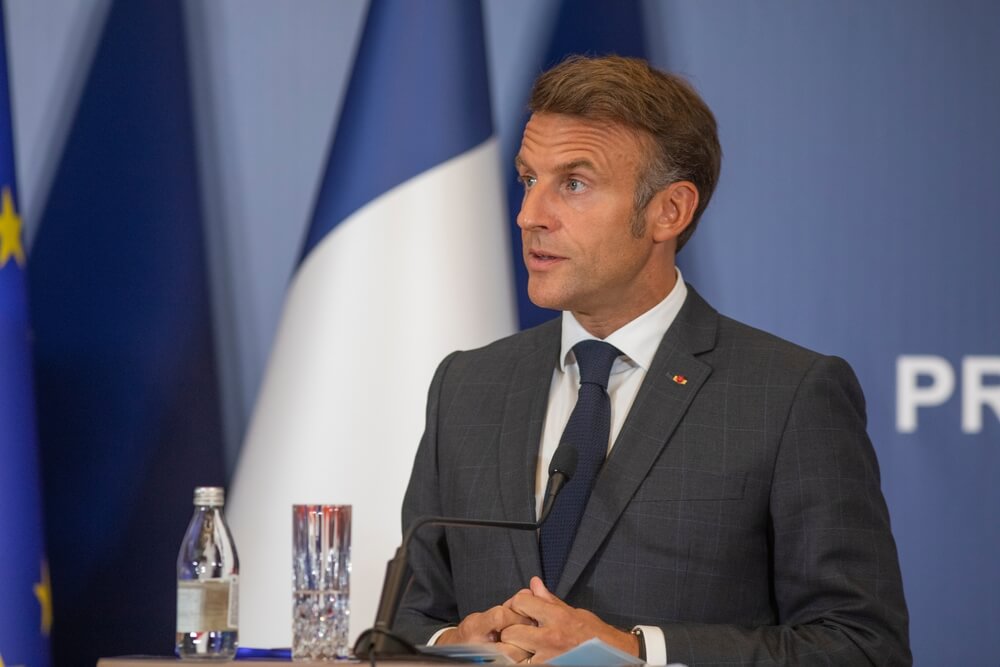
President Emmanuel Macron is set to unveil plans for France to play a more active role in Europe’s nuclear deterrence. Speaking from the Île Longue peninsula, where France’s four nuclear-powered ballistic missile submarines are stationed, Macron is expected to emphasize that his country’s efforts would complement — not replace — the US nuclear umbrella. This will be his first major address on the subject since 2020, when he first suggested involving willing European partners in nuclear exercises, an idea that initially went largely unnoticed.
Rising Concerns Amid Global Tensions
Interest in France’s nuclear role has grown amid major geopolitical shifts. Russia’s invasion of Ukraine highlighted European vulnerabilities, while former US President Donald Trump’s approach to NATO allies and a partial US troop redeployment toward the Indo-Pacific have raised questions about Washington’s long-term commitment. France has engaged in strategic talks with German Chancellor Friedrich Merz and other EU leaders to explore how European countries can coordinate their nuclear policies. Officials note that Russia’s new hypersonic missiles, China’s rapidly expanding arsenal, and Iran’s uncertain future have all increased European interest in a stronger French nuclear role, while making clear that this does not compete with NATO.
Focus on Sufficiency, Not Arms Race
France maintains a “strict sufficiency” nuclear policy, keeping roughly 300 warheads — far fewer than the US or Russia — enough to inflict unacceptable damage if required. French officials stress that their strategy is defensive, not competitive, and rejects nuclear war. Cooperation with the UK has also increased under the Northwood Declaration, including a Nuclear Steering Group and joint exercises, strengthening Franco-British coordination and ensuring a more resilient European nuclear posture.
