


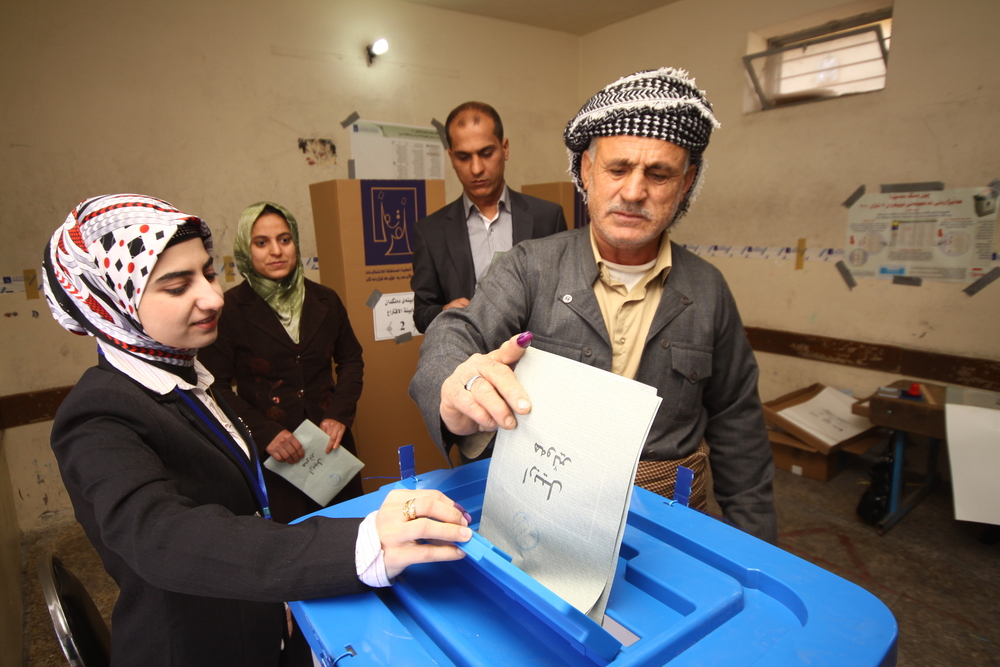
Iraq began early ballots Sunday, with security forces and displaced citizens casting votes ahead of Tuesday’s critical election. Around 1.3 million military personnel and 26,000 displaced residents are eligible. 7,744 candidates, mostly from sectarian-linked parties, compete as Prime Minister al-Sudani seeks a second term amid rising regional tensions. The outcome could redefine Iraq’s political balance between Tehran and Washington.
Displaced Communities Weigh Political Influence
Yazidis, many uprooted by past Islamic State attacks, voted from a camp near Dohuk. Reconstruction delays and armed groups keep most families from returning to Sinjar. Thousands were killed or enslaved during IS’s campaign. Some families trickle back home, but insecurity and damaged infrastructure block a full return.
Edris Zozani, a Yazidi voter, chose the Kurdish Democratic Party (KDP). He explained, “Independent Yazidis cannot gain influence, but strong parties like KDP can advocate effectively.” The vote reflects ongoing challenges for displaced communities seeking representation.
Militias Participate in Shaping Parliament
In Baghdad, soldiers, police, and Popular Mobilisation Forces (PMF) members cast ballots. Though formally under Iraq’s military, the PMF retains significant autonomy. Parliament debates legislation to define its role, sparking U.S. objections over militia influence.
A PMF fighter, speaking anonymously, said, “I voted for the list that defends the PMF.” Several PMF factions run political parties, and their electoral success could affect Iraq’s internal power and relations with Washington.
