


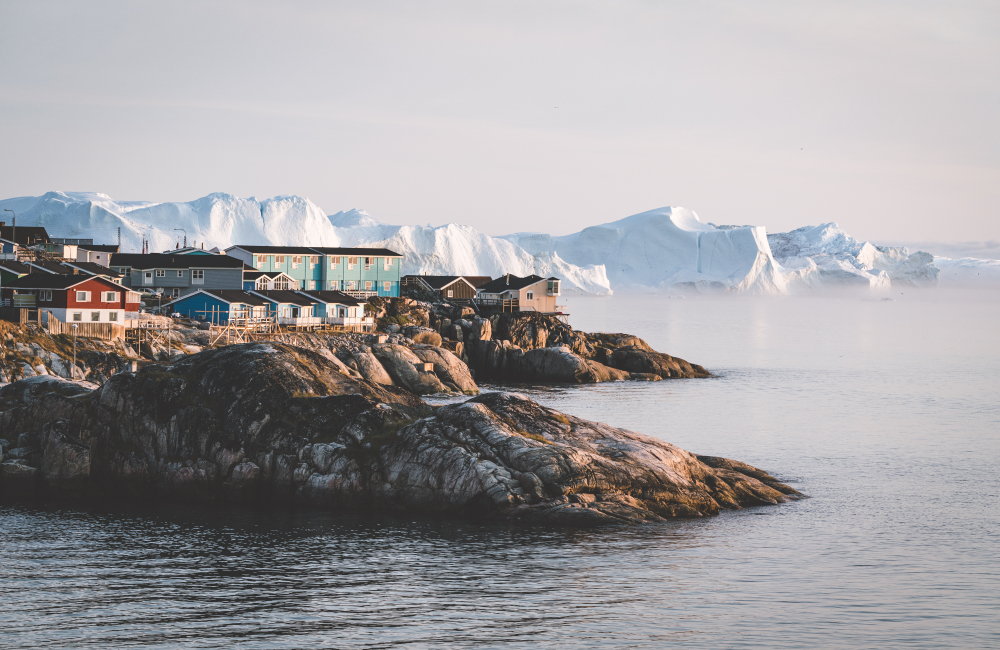
Greenland, the vast Arctic island off Canada’s northeastern coast, has once again become a flashpoint in international politics. With more than two-thirds of its territory lying within the Arctic Circle, Greenland has long been crucial to North American defense, and now the Trump administration has renewed its push to bring the island under U.S. control.
Trump Signals Military Option
White House press secretary Karoline Leavitt said Tuesday that President Trump considers acquiring Greenland a national security priority, calling it “vital to deter our adversaries in the Arctic region.” She added that “the president and his team are discussing a range of options to pursue this important foreign policy goal, and of course, utilizing the U.S. military is always an option at the commander in chief’s disposal.”
Trump first floated the idea of purchasing Greenland during his first term, but the topic resurfaced after the U.S. military operation that led to the capture of Venezuelan President Nicolás Maduro. Trump argued Greenland is strategically critical, citing increased activity from Russia and China in the Arctic.
Despite these statements, some officials, including Trump’s special envoy to Greenland, Louisiana Governor Jeff Landry, and deputy White House chief of staff Stephen Miller, have suggested military action is not necessary. Republican House Speaker Mike Johnson also dismissed the idea, saying it would be inappropriate.
International Pushback Defends Greenland’s Sovereignty
The U.S. statements drew quick international criticism. Leaders from Denmark, France, Germany, Italy, Poland, Spain, and the United Kingdom reaffirmed that Greenland “belongs to its people.” The joint statement emphasized that decisions about the island’s future should rest solely with Denmark and Greenland.
Canada also voiced support for Greenland’s autonomy. Prime Minister Mark Carney announced that Governor General Mary Simon, who is of Inuit descent, and Foreign Minister Anita Anand will visit Greenland next month. “The future of Greenland and Denmark are decided solely by the people of Denmark,” Carney said alongside Danish Prime Minister Mette Frederiksen.
Trump’s administration, however, has focused on engaging directly with Greenland residents. Governor Landry said he prefers to speak with Greenlanders about improving local quality of life rather than negotiating with Danish or European officials, joking that Greenlanders “belong in Louisiana” as part of a lighthearted approach he called “culinary diplomacy.”
Greenland’s Strategic and Economic Importance
Greenland’s significance is both military and economic. The U.S. operates the Pituffik Space Base in northwestern Greenland, built under a 1951 defense agreement with Denmark. The base supports missile warning, missile defense, and space surveillance operations for the U.S. and NATO.
The island guards a critical part of the GIUK Gap—Greenland, Iceland, and the United Kingdom—a naval corridor closely monitored for Russian activity. Greenland is also rich in rare earth minerals, essential for electronics, renewable energy technologies, and batteries. The U.S. Geological Survey has identified potential offshore oil and natural gas deposits as well.
Greenland became part of Denmark in 1953, and legislation in 2009 expanded its self-rule while recognizing the island’s right to independence under international law—an option supported by many Greenlanders. For now, Greenland’s future rests in the hands of its own people, even as global powers continue to weigh its strategic and economic value.
