


Late Thursday night, EU leaders quietly admitted that their ambitious plan to fund Ukraine with frozen Russian assets had failed. Months of debate could not overcome legal, financial, and political obstacles, forcing a retreat from a scheme supporters had hailed as morally compelling and strategically bold. Critics had warned for months that the plan carried huge uncertainties and risks for the bloc, and as negotiations reached their final stage, caution overtook ambition. Leaders instead turned to a familiar, predictable solution that avoided direct exposure to the frozen Russian funds.
Rather than seize Russian assets, the EU will now raise €90 billion on financial markets through joint borrowing. The €210 billion in frozen assets will remain untouched until Russia ends its war and compensates Ukraine. The decision leaves the European Commission’s original promise unfulfilled and highlights how fragile the coalition proved when faced with unprecedented liability and political complexity. Belgian Prime Minister Bart De Wever played a decisive role in blocking the plan, repeatedly warning that moving forward would create enormous exposure for European banks and weaken leverage over Moscow. His insistence on legal certainty and shared responsibility ultimately resonated with other capitals, tipping the balance against the loan.
From Proposal to Public Debate
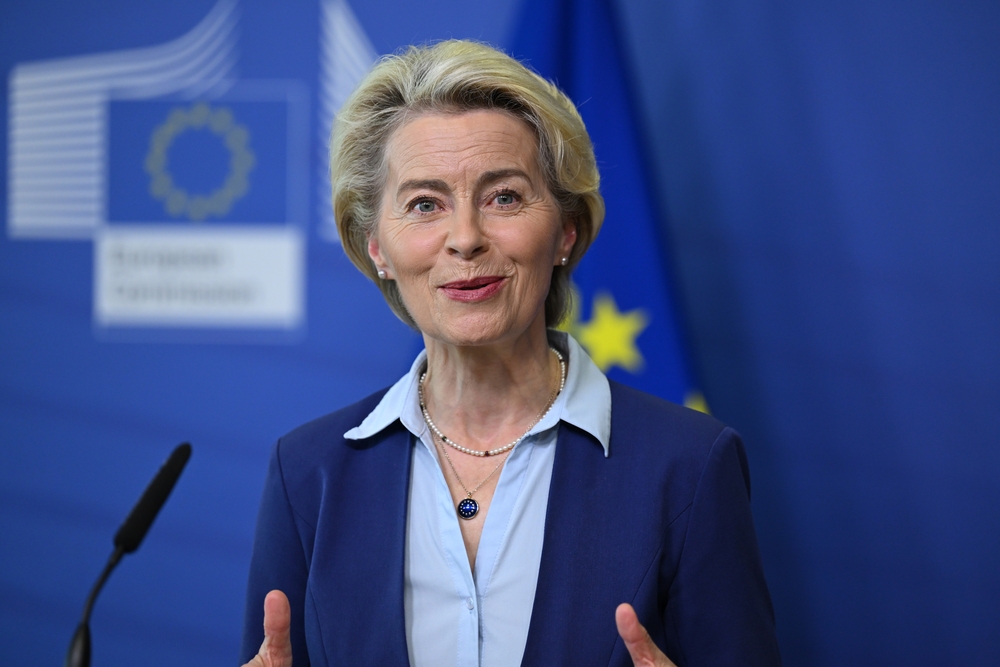
The idea first entered public discussion on 10 September, during Ursula von der Leyen’s State of the EU speech in Strasbourg. She proposed using profits from frozen Russian assets to support Ukraine’s resistance and reconstruction, arguing that Russia should pay for the destruction it had caused and that European taxpayers should not bear the cost alone. The speech, while symbolically powerful, offered few concrete technical details, leaving member states to wrestle with the legal and financial implications over the following weeks.
German Chancellor Friedrich Merz soon gave the proposal fresh momentum by endorsing it in a Financial Times opinion piece. He presented it as both politically necessary and achievable, implying broad support already existed. Many diplomats were caught off guard, and some accused Germany of attempting to set the EU agenda unilaterally. The Commission then circulated a brief document outlining the concept in theoretical terms, which sparked further unease among more cautious states.
Belgium reacted strongly, noting that it controls roughly €185 billion of the frozen assets via Euroclear. Officials argued they should have been fully consulted given the country’s exposure. De Wever publicly warned that using these assets would destroy Europe’s strongest leverage over Moscow and insisted on airtight legal guarantees and full risk sharing. An October summit ended inconclusively, with leaders asking the Commission to explore multiple funding options, while von der Leyen continued to advocate the reparations loan as the preferred solution.
Why the Plan Collapsed
By November, von der Leyen presented three options to leaders: voluntary national contributions, joint debt, or the reparations loan. She admitted none came without serious drawbacks. Her letter attempted to address Belgian concerns with expanded guarantees and broader participation, while also acknowledging potential reputational and financial risks for the eurozone.
External events briefly revived support for the plan. US and Russian officials circulated a controversial peace framework proposing the use of frozen assets for shared commercial benefit. European leaders immediately rejected the plan, insisting that decisions over European funds must remain under EU control. Momentum appeared to return to the reparations loan, but it proved short-lived.
De Wever then sent a sharply critical letter describing the plan as fundamentally flawed and dangerously premature, warning that it could undermine future peace negotiations. In December, the Commission released detailed legal texts, but the European Central Bank refused to provide liquidity support. Euroclear publicly criticised the plan as experimental and fragile, raising fears for investor confidence. Although several northern and eastern states defended the loan, opposition grew as Italy, Bulgaria, and Malta pressed for safer, more predictable financing methods.
At the 18 December summit, leaders confronted the prospect of unlimited guarantees and massive potential liabilities tied to Belgian banks. They shelved the reparations loan and opted for joint debt instead. De Wever later reflected that the outcome confirmed his expectations, emphasizing that no financial plan comes without real costs and that the idea of free money was always an illusion.
