


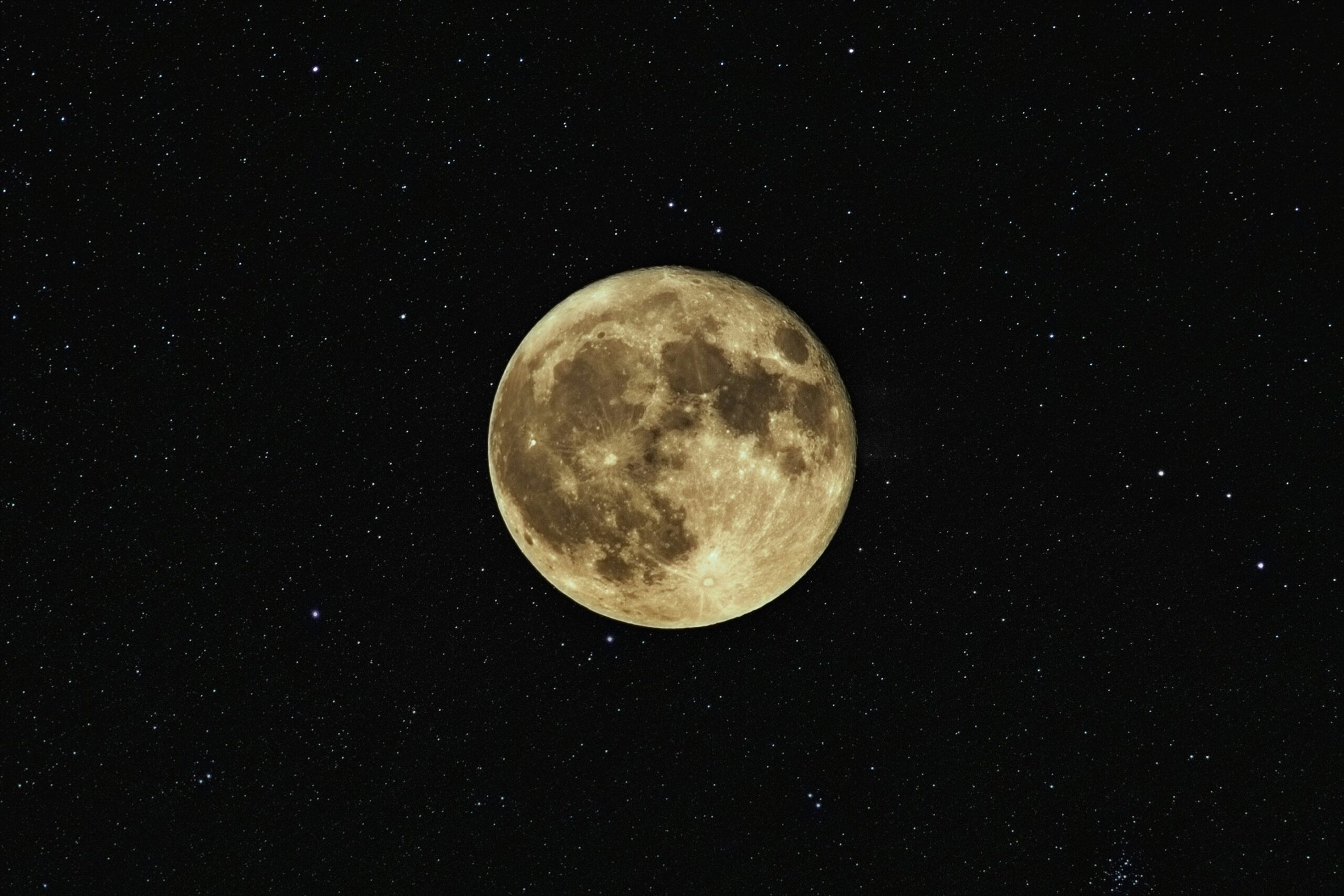
Astronomers traced Theia, the vanished planet that helped form the Moon, using ancient lunar and terrestrial rocks.
They concluded Theia probably formed much closer to the Sun than previously thought.
For decades, scientists theorized that Theia collided with early Earth about 4.5 billion years ago.
Debris from that impact coalesced into the Moon and spread Theia’s material across both worlds.
The giant impact theory has guided research since Apollo missions returned the first lunar samples.
Theia’s disappearance erased direct chemical evidence, leaving its origin and composition uncertain.
Jake Foster of the Royal Observatory Greenwich praised the study for pinpointing Theia’s original location.
He emphasized that scientists can reconstruct the history of a planet that vanished billions of years ago.
Planetary Reverse Engineering
Researchers examined isotopes in Earth rocks and Apollo lunar samples to study their chemical fingerprints.
Earth and Moon rocks share nearly identical metal isotope ratios, complicating separation of Theia’s material.
The team analysed isotopes of iron, chromium, zirconium, and molybdenum to model Theia’s composition.
They simulated hundreds of early Earth–Theia collision scenarios to match observed isotopic patterns.
Materials formed closer to the Sun carry slightly different isotopes than those formed farther away.
By comparing these isotopic signatures, scientists concluded Theia formed inside Earth’s orbit in the inner Solar System.
Earlier theories had suggested Theia originated farther from the Sun, but new evidence contradicts that view.
Implications for Planet Formation
Researchers hope the study will improve understanding of planetary growth and collisions in early solar systems.
The analysis may help scientists model how planets evolve and interact under varying conditions.
Tracing Theia’s origin strengthens knowledge of how the Moon and Earth acquired their compositions.
Astronomers believe this method can be applied to other long-lost or destroyed planetary bodies.
The study highlights how ancient rock samples reveal the history of planets that no longer exist.
Future research may expand on these findings to refine our view of early Solar System evolution.
